Why Use Psychometric Assessments?

In organisations, Psychometric Assessments are most commonly used to ensure that the correct candidate is selected for a particular role.


Job fit is a concept that refers to how well an individual is suited to their role in the organisation. But… there are endless factors that can influence job fit, or job suitability.


A thorough job description may describe the individual competencies as well as the skills and knowledge required to perform a role optimally and, taking this information, we can make use of Psychometric Assessments to gain insight in terms of the likely fit of the individual to the job requirements and make more informed decisions in the selection process.

Hiring a new employee is about selecting the right person with the required knowledge, skills and ability to perform the job optimally. However, not all selection decisions make the impact that was envisioned, and the main reason is that the new employee is not a good fit for the organisation or the job.

This may be because the person looks good “on paper” or comes across well in the interview, but their everyday behaviours and preferences do not make them a good fit for the organisation or the role which they have been hired to perform. This is where Psychometric Assessments can be very useful in that they can provide objective insight into possible future behaviours.
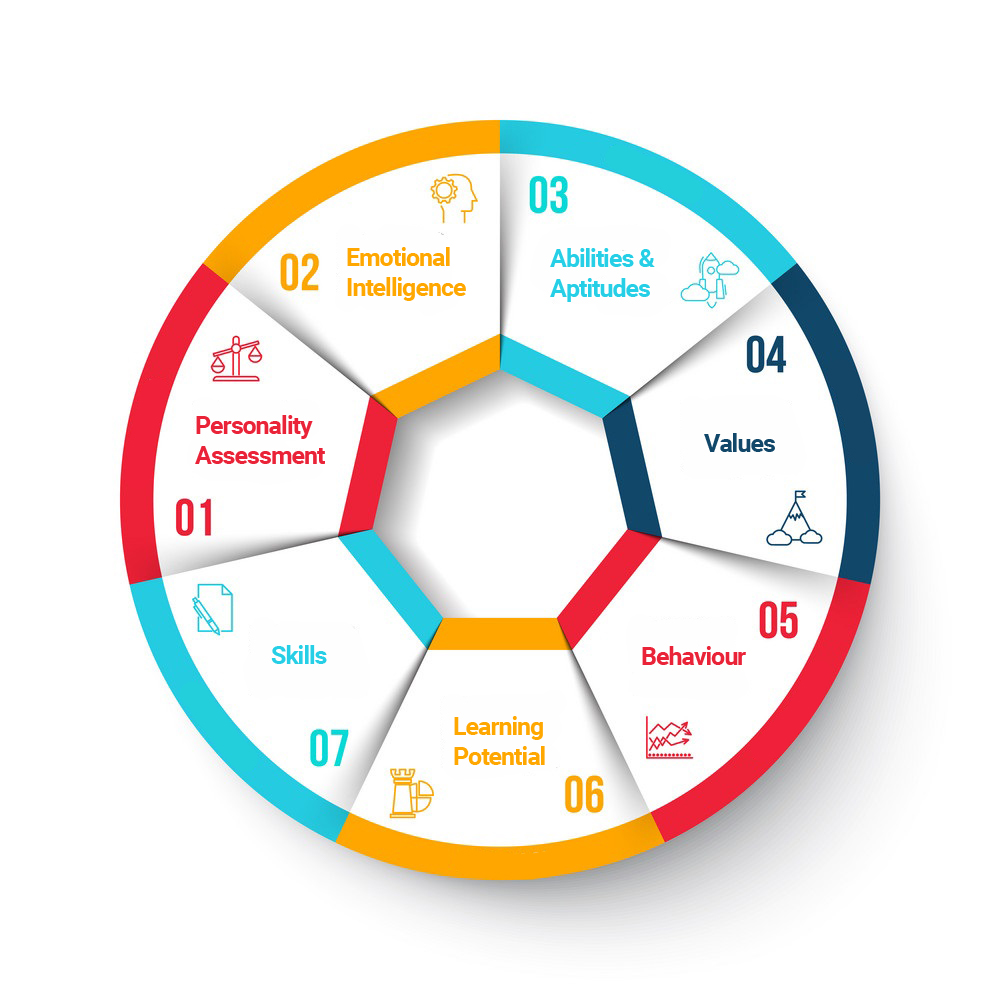

What can be assessed?

Personality Assessment

It is key to compare the personality traits or preferences of a candidate with those which are deemed to be essential for the role in order to determine suitability  for the role.

Emotional Intelligence

This is important in roles where it is essential to both manage own emotions as well as to be able to understand and manage the emotions of others.

Abilities and Aptitudes

The assessment of a candidate’s capabilities within a defined area of competence. This may include cognitive ability, logical reasoning, verbal ability etc.

Values

It is essential to determine whether the values held by an individual are in line with those of the organisation to ensure a good person- organisation fit. Motives can also be assessed to see if the person is right for the organisation (e.g.: motivated by monetary benefits for a sales role)

Behaviour

Observation of behaviour through exercises such as presentations, role-plays or in-basket exercises may give an indication of the likely behaviour of the candidate in the workplace and may assist in backing up the results of the assessments.

Learning Potential

The concept of what it means to be intelligent varies across different contexts and cultures, but the term ‘high learning potential’ most often refers to an ability to understand information well, make quick analyses and use memory capacity to learn quickly.

Skills

The learned ability of a candidate to carry out specific tasks, such as the use of excel, or call centre skills.

Hiring the wrong person

Can have huge cost implications for your organisation, which may include:

High staff turnover

Reduced effectiveness

High training costs

Repeat recruitment costs

Psychometric assessments

Helps to make the hiring of staff more accurate with the objective to:

Reduce costs

Increase productivity

Suitable placement